From 85 Countries: How a Truly International Summer School Benefits Your Child
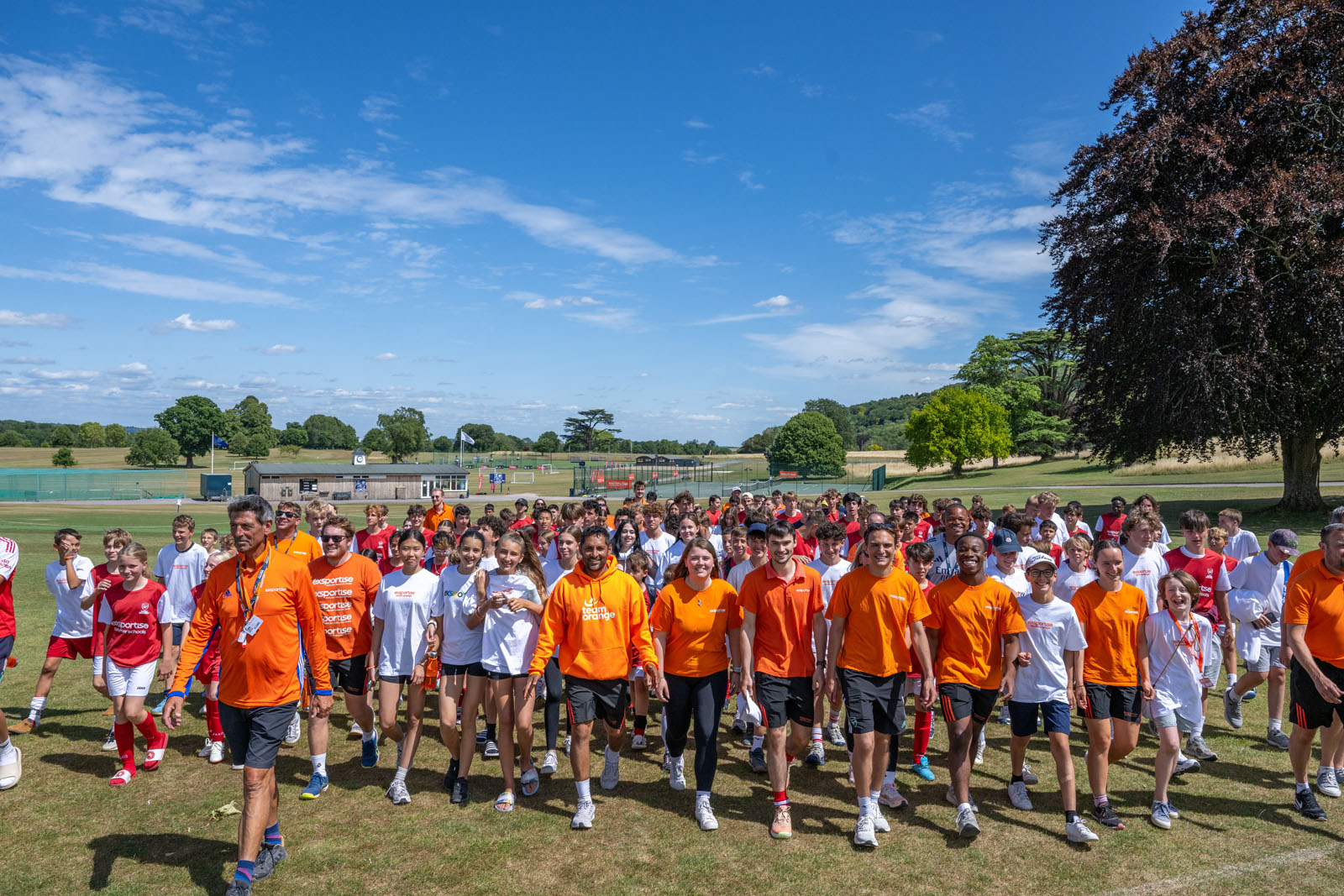
Picture a thirteen-year-old from Milan sitting next to a twelve-year-old from Seoul at breakfast. They have known each other for three days. Neither speaks the other's language. But they are deep in conversation about football, using a mix of English, hand gestures, and a shared enthusiasm that transcends grammar. By lunch, they will be on the same coaching team. By the end of the week, they will be inseparable.
This is what happens when you place children from dozens of different countries in the same residential setting and give them a reason to connect. It is not a classroom exercise in cultural awareness. It is real life, happening in real time, and the developmental benefits run deeper than most parents expect.
The difference between international and truly international
Many UK summer schools describe themselves as international. Some have students from ten or fifteen countries. Others draw heavily from one or two regions, with a scattering of nationalities for variety.
A genuinely international programme is different. When a residential school hosts young people from 85 or more countries in a single summer, no single culture dominates. There is no majority group, no default language outside of English, and no social hierarchy based on where someone is from. Everyone is equally foreign and equally welcome.
This balance matters. Research in developmental psychology consistently shows that children benefit most from cross-cultural contact when the environment is balanced rather than dominated by one group. At Exsportise, the mix is broad enough that every child has the experience of being both different and similar, which is exactly where growth happens.
Cultural fluency is the skill of the century
Employers increasingly talk about cultural competence as a core requirement. Universities value it. International organisations depend on it. But cultural fluency is not something you can teach in a lecture. It is learned by living it.
When your child shares a dormitory with someone from a different continent, they learn things that no textbook covers. They learn that personal space means different things in different cultures. They learn that humour does not always translate. They learn that someone can see the world completely differently and still be kind, funny, and worth knowing.
These are small lessons that accumulate. Over two or three weeks in a multinational environment, children develop an instinctive understanding of how to read social situations across cultural lines. They learn to adjust, to listen more carefully, and to assume less. This is cultural fluency, and it is extraordinarily valuable.
The dining hall effect
There is a reason so much of the social development at residential summer schools happens at mealtimes. Three times a day, every student sits down together. There is no opt-out, no bringing food to your room, no eating alone with headphones in.
The dining hall is where friendships form across activity groups. A child who plays tennis in the afternoon might sit with friends from their English class at lunch and a completely different group at dinner. The seating is informal, which means children choose who they sit with, and those choices shift and expand as the days pass.
For children from homogeneous communities at home, this can be transformative. They discover that the child from Turkey shares their taste in music. The child from Colombia supports the same football club. The child from China has the same nervous laugh before a match. Difference becomes ordinary, and shared humanity becomes obvious.
Communication skills that go beyond language
Every parent who sends their child to an English summer school wants their language skills to improve. They do, often dramatically. But a multinational environment develops a broader set of communication skills that are just as important.
Your child learns to communicate with people who have limited shared vocabulary. This forces creativity. They use simpler words, clearer sentences, more gestures, more patience. They learn to check understanding rather than assume it. They learn that tone and body language carry as much meaning as words.
These are sophisticated communication skills that many adults never master. A child who has spent two weeks navigating conversations with peers from twenty different countries develops a communicative flexibility that serves them in every future context, from university group projects to international business meetings.
Empathy through proximity
It is easy to have opinions about people you have never met. It is much harder to hold prejudices about someone you have shared a room with, trained alongside, and laughed with at dinner.
Residential summer schools are uniquely powerful environments for building empathy because the contact is sustained, personal, and equal. Your child does not just meet someone from a different country. They live with them. They see them tired and happy, frustrated and triumphant, homesick and excited.
This proximity creates understanding that no cultural exchange programme or school assembly can replicate. When a child from London has spent two weeks living alongside a child from Lagos, their understanding of Nigeria is no longer abstract. It is personal. It has a face, a name, and a shared memory of winning a doubles match in the rain.
At Exsportise, the boarding house environment is designed to support exactly this kind of connection. Rooms are shared, common areas are communal, and pastoral staff are on hand to help children navigate the occasional friction that comes with living closely with people who do things differently.
Independence and adaptability
Being the only child from your country at a summer school sounds daunting. For many children, it is the first time they cannot rely on a fellow national to translate, explain, or buffer. They have to figure things out themselves, in English, with children they have just met.
This is uncomfortable at first and enormously valuable afterwards.
Children who attend multinational residential programmes consistently demonstrate greater adaptability when they return home. They are more willing to try new things. They are less anxious about unfamiliar situations. They have proved to themselves that they can cope somewhere new, with new people, in a different language, and not just cope but enjoy it.
Parents notice this. It is one of the most frequently mentioned outcomes in post-programme feedback. Not the English improvement or the sport development - though both matter - but the quiet confidence that comes from having managed something challenging independently.
The friendship network
There is a practical benefit to making friends from around the world at age twelve or fourteen that parents sometimes overlook. Those friendships, maintained through social media and messaging, become a global network as children grow up.
Former summer school friends visit each other in their home countries. They provide local knowledge when someone travels. They become contacts at universities in different cities. In some cases, childhood friendships formed over two weeks at a summer school become lifelong connections that span continents.
This is not guaranteed, of course. But the conditions at a residential programme are ideal for forming strong bonds. Shared intensity, shared novelty, and shared experience create the kind of accelerated closeness that everyday life rarely produces.
What this means for your child's future
The world your child will work in is global. Their colleagues, clients, classmates, and neighbours will come from everywhere. The ability to connect across cultures, communicate with clarity and empathy, and feel comfortable in unfamiliar environments is not a nice-to-have. It is essential.
A multinational summer school does not teach these skills through a curriculum. It teaches them through experience. Your child absorbs cultural fluency by living it, develops empathy by proximity, and builds confidence through independence. The English improvement is real and measurable. The personal development is harder to quantify but arguably more important.
Choosing a programme that delivers this
Not every international summer school provides these benefits equally. The key factors are the breadth of the nationality mix, the quality of the residential environment, and the staff who facilitate it.
Look for programmes where no single nationality dominates. Ask about pastoral care and the experience of boarding staff. Check that activities and coaching are structured to mix students across nationalities rather than allowing groups to self-segregate.
At Exsportise, over 35 years of experience have shaped a programme where this mixing happens naturally. English is the shared language. Sport is the shared purpose. And the residential setting creates the sustained proximity that turns acquaintances into friends.
If you would like to understand how this works in practice, book a call with our team. We can walk you through how the programme is structured, how pastoral care works, and what parents and children typically experience.